All processing of personal data must comply with the GDPR’s legal bases and be properly documented by your organisation.
As employees often launch new projects or processes involving personal data, it is important to understand these legal requirements to ensure compliance.
This training will guide you through the legal bases for handling both non-sensitive and sensitive personal data, offering practical examples relevant to different workplace scenarios.
Course Topics
Lesson 1) Introduction to Legal Bases
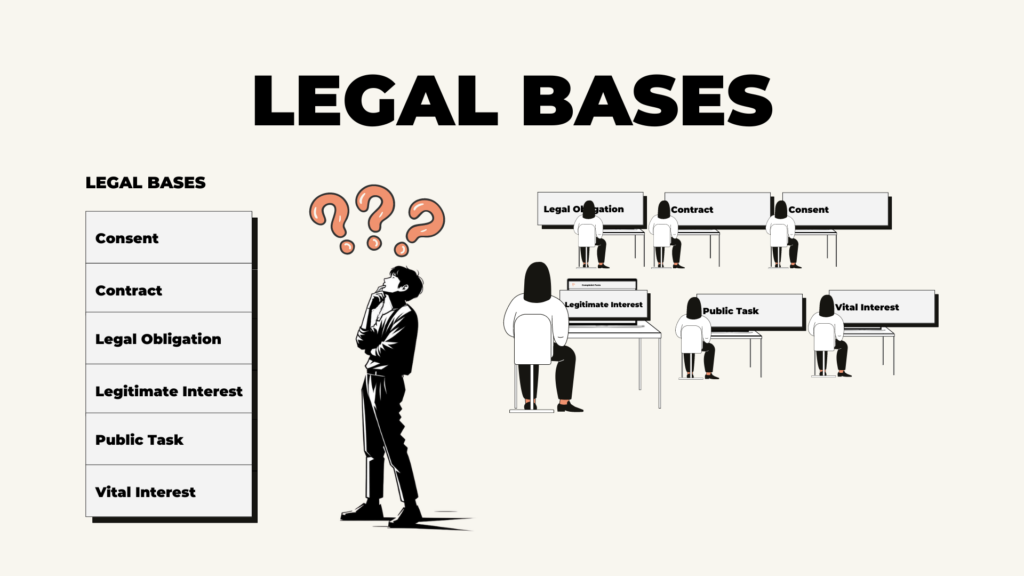
Any organization’s processing of personal data must have a legal basis. Therefore, it is useful for all employees to understand this, which is the topic introduced in this short lesson.
Lesson 2) The 6 Legal Bases of the GDPR
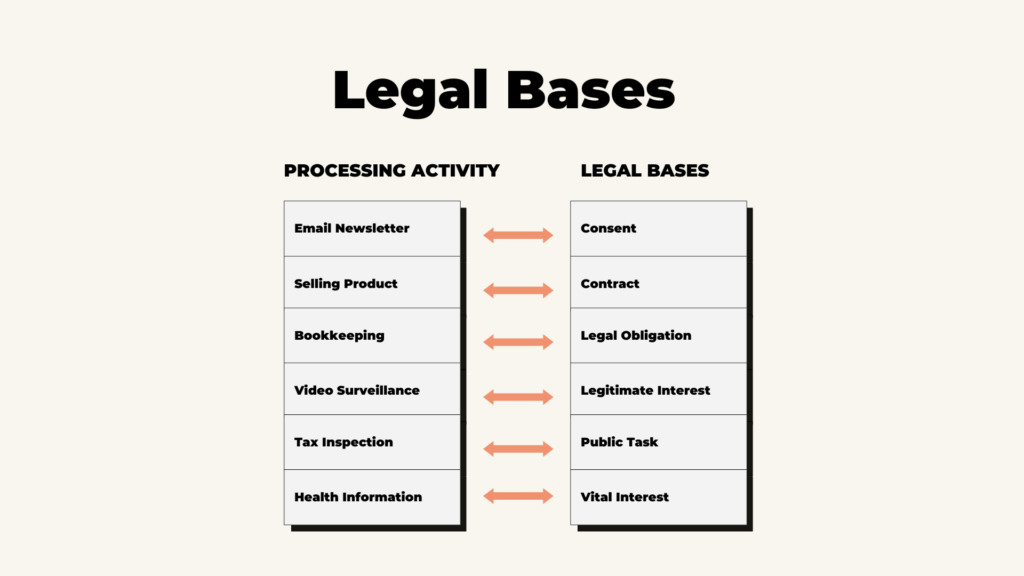
In the previous lesson, we established the importance of knowing the legal bases for processing personal data. In this lesson we will review the 6 legal bases of the GDPR for processing personal data.
Lesson 3) Sensitive Personal Data and Your Legal Bases
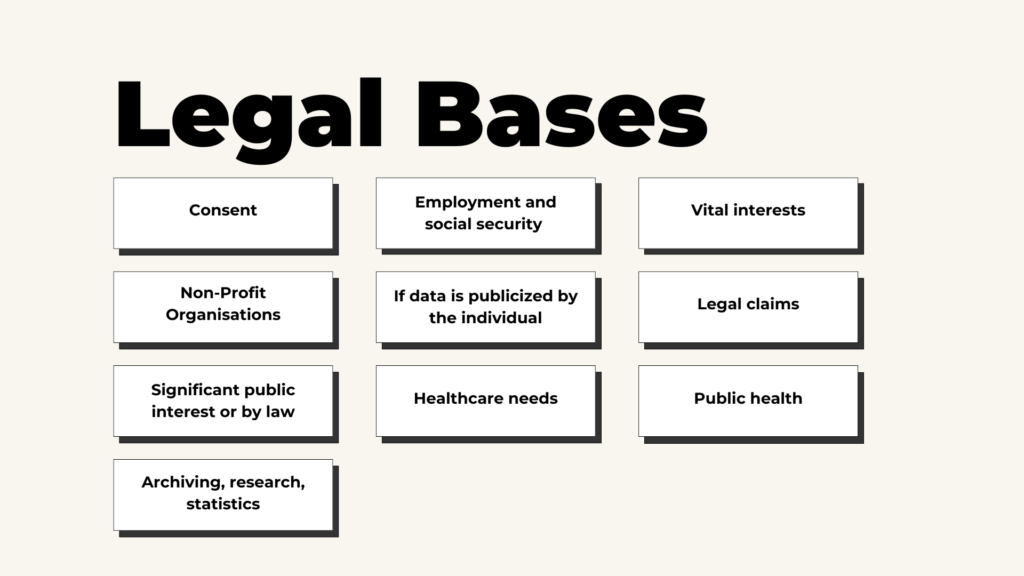
In another training, we explored the two categories of personal data: ‘non-sensitive’ and ‘sensitive’ personal data. This distinction is important because processing sensitive personal data is prohibited unless stringent conditions are met.
Lesson 4) Legal Bases in Different Teams
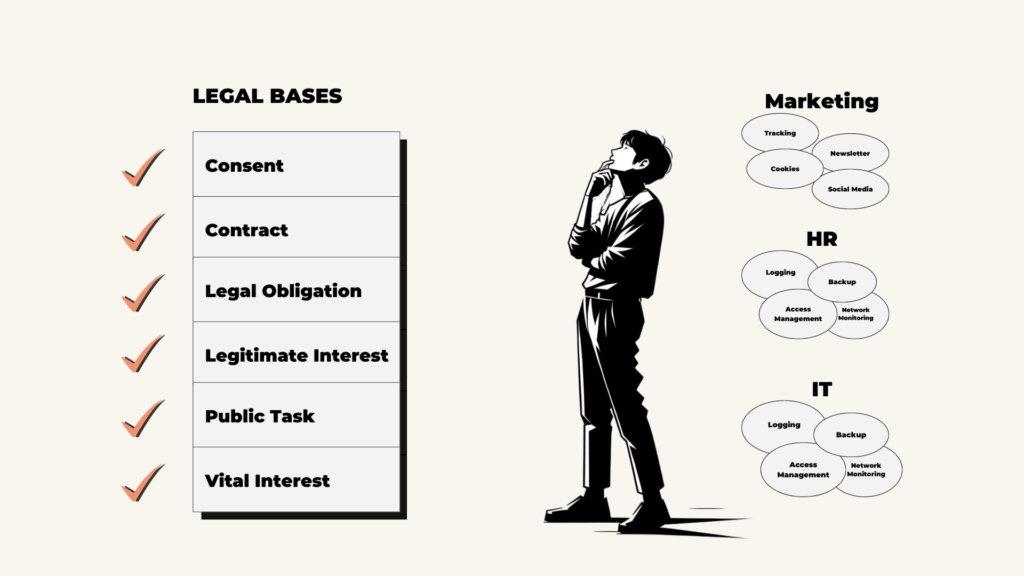
This training ends with an exploration of examples showing how legal bases can be relevant to different teams within a company, such as Marketing, HR, and IT.
Legal Bases for Processing Personal Data
This training teaches employees that processing personal data always requires a legal basis.
In this training we will start with the basics: What is personal data?
It might seem trivial, but a clear understanding of this will make it much easier to understand the data protection regulations in theory and practice.
Your colleagues will learn about these different categories of personal data and the nuances that distinguish non-sensitive from sensitive personal data.
Learn what “processing” of personal data means, discover the scenarios where it takes place, and identify who in an organization is responsible for it.
Awareness trainings make you compliance-ready while also improving the security awareness in your organisation. To establish a security culture your organisation must work programmatically with technical and organisational elements.